The view beneath the surface
Cavities hiding between teeth, bone changes under the gum, infection at a root tip: none of it is visible to the naked eye. A few seconds of imaging changes that.
What X-rays tell your dentist
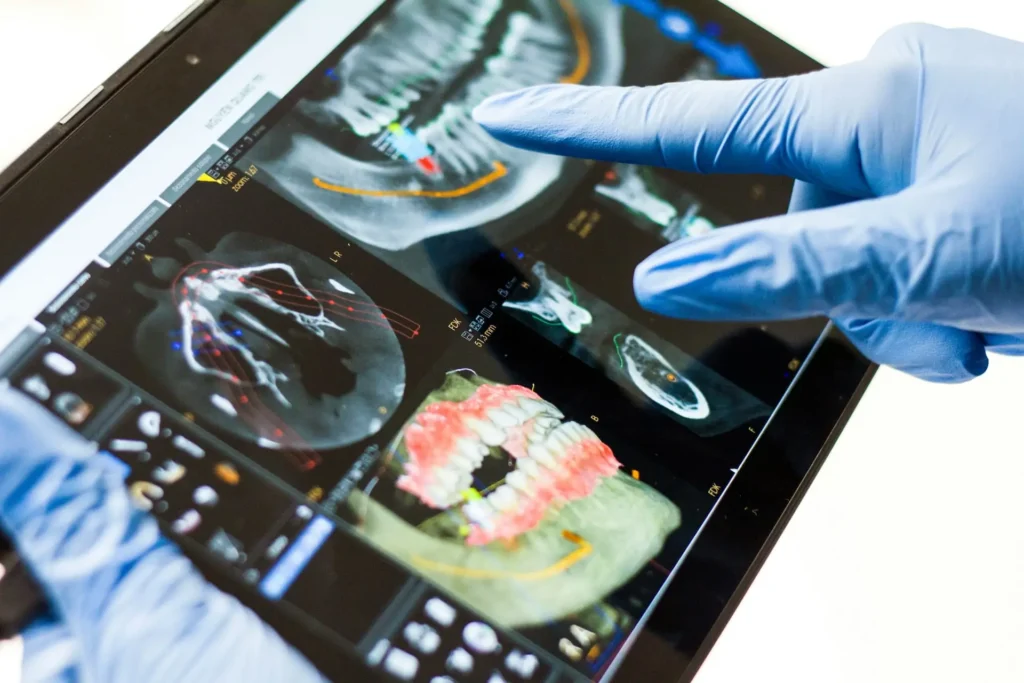
An exam with mirrors and lights covers the surfaces. Imaging covers the rest: decay forming in the tight contacts between teeth, an abscess at the end of a root, bone lost to gum disease, a tooth that never erupted, or decay growing under an older filling or crown. That’s why images are a normal part of a dental exam and a core piece of preventive care.
Early detection keeps treatment small. A pinpoint cavity is a quick filling. Wait until it reaches the nerve, and it’s a root canal.
How safe is dental imaging?
Very. A routine set of dental X-rays involves a tiny dose, roughly what you’d absorb from natural background sources over a few hours and far below a chest X-ray. We add a lead apron or thyroid collar for extra protection, and we take images when there’s a clinical reason, not simply because a calendar says so.
How often will I need them?
There’s no one-size schedule. Kids, adults with a history of cavities, and people with gum disease all need different intervals. For a typical adult with healthy teeth, that tends to mean bitewings about once a year and a panoramic or full series every three to five years. On your first visit we usually capture a baseline so later images have something to be compared with.
Moving here from another city? Ask your previous office to email us any images from the last several months. If they’re recent and clear, we won’t need to repeat them.
Ready to get caught up?
X-rays for kids, and during pregnancy
Expecting, or think you could be? Mention it when you call. Non-urgent imaging generally waits until after the baby arrives, and we’d only take an image during pregnancy if something needs treating now.
For children, periodic images show how the adult teeth are lining up underneath and flag small cavities in baby teeth before they cause pain.
What do X-rays cost?
In most cases you won’t see X-rays as a separate charge. They’re rolled into a new-patient exam or a recall visit.
BluePeak takes most PPO plans, and nearly all of them pay for routine imaging on a regular cycle. We confirm your coverage before your appointment. Without insurance, you can spread costs out through our insurance and financing options. Questions about your plan? Call the front desk.
Figures below are pre-insurance. Most patients have X-rays during a checkup they’re already coming in for.
Typical self-pay pricing
- Bitewings (pair) $35–$70
- Full series or panoramic $155
Book a visit
No rush. No judgment. No surprises.
X-ray FAQs
Are dental X-rays safe for me?
How frequently should I have X-rays?
My teeth feel fine. Why would I need X-rays?
Does insurance pay for X-rays?
Can I get X-rays if I’m pregnant?
Book a visit
No rush. No judgment. No surprises.