Skip to content
Seattle Dental Bridges

Close the gap with a fixed bridge that chews like the real thing.

A sturdy, natural-looking replacement for one or more missing teeth, with PPO insurance accepted and the full cost in writing before we start.
Close the gap with a fixed bridge that chews like the real thing.
  • PPO insurance accepted
  • Written price before treatment
  • Taking new patients

Fixed, not removable

A bridge is cemented in. There’s nothing to take out at night, and you bite down on it like any other tooth.

Benefits checked, cost on paper

We confirm your PPO coverage ahead of time and give you the total in writing. You see the number, then decide.

Bridge or implant, honestly

Both have real pros and cons. We lay them out plainly so you can pick what suits your mouth, schedule, and budget.

How a bridge works

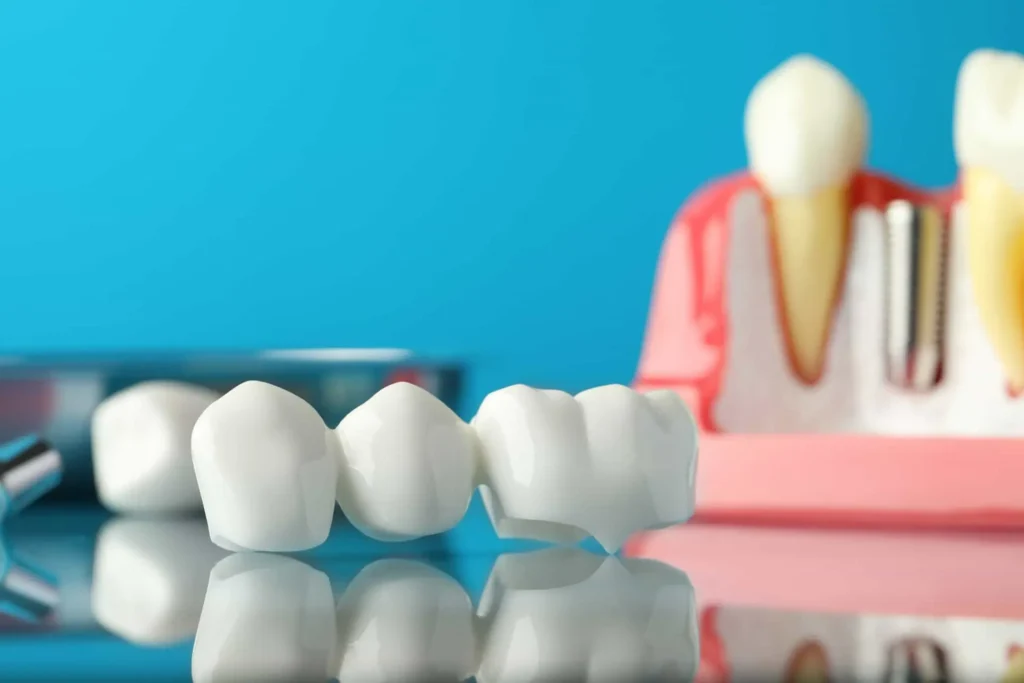
A bridge fills a space by suspending a replacement tooth between two supports, and it’s one of the restorations we place most often at our Seattle office. The replacement tooth, or pontic, hangs in the gap, held by crowns on the teeth on either side. Bridges belong to the same family of restorative care as crowns and fillings.

Once it’s cemented, it doesn’t come out. You talk, eat, and smile with it as you would with your own teeth.

Four bridge designs

Your dentist will look at the gap and the teeth around it at your consult and recommend the design that suits it.

Traditional

The standard design: a pontic held by crowns on the teeth at each end of the gap. Suits most single missing teeth.

Cantilever

Supported from one side only, for gaps where just one healthy neighbor is available. Used less often.

Maryland

Wings bonded to the back surfaces of the neighboring teeth instead of full crowns. More conservative, generally less durable, and most often used up front.

Implant-supported

Held by dental implants rather than natural teeth. The steadiest choice when several teeth in a row are missing.

The trade-offs, up front

Bridges have a long, reliable track record. They also come with a few realities you should know about before committing, and we’d rather tell you now than have you discover them later.

For plenty of people a bridge is still the right answer, especially when the teeth next to the gap already need crowns, or when you want it done in a couple of visits rather than a few months. What matters is that you’ve weighed both routes before choosing.

Healthy neighbors get trimmed

For a traditional bridge, the teeth on each side are reduced to fit crowns. That change is permanent, even if those teeth were in perfect shape. It’s the biggest difference compared with an implant.

Flossing needs a threader

Because a bridge is one connected unit, you’ll use a floss threader, a small plastic loop, to get floss under the pontic. It takes a minute to learn and a few seconds each day, and we’ll show you how when it’s placed.

Bone under the gap thins out

Without a root in that spot, the jawbone slowly shrinks. A bridge replaces what you see; an implant also helps keep the bone. If that’s a concern for you, our dental bridge vs. implant comparison lays out the two in detail.

Bridge pricing in Seattle

Your price depends on the bridge design, the material, and how many teeth it replaces.

PPO plans usually pay part of a bridge, and we accept most of them. We confirm your benefits before your visit and put the total in writing before any work starts.

Usual range · per unit

Each crown or pontic

Usual range · three-unit bridge

Two support crowns and one pontic, pre-insurance

Getting a bridge, step by step

Both appointments are at our Belltown office, and most people can eat normally right after the second.

Prep visit

We shape the support teeth, take impressions, and fit a temporary bridge for you to wear in the meantime.

At the lab

A dental lab builds your permanent bridge to match your teeth’s shape and shade. We’ll give you the timeline at the first visit and book the second appointment before you leave.

Seating

We take off the temporary, check the fit, color, and bite, and cement the final bridge.

FAQ

Bridge FAQs

What does a bridge cost?
That depends on how many teeth it spans and the materials. PPO plans typically pay part. You’ll get the full written cost after we check your benefits.
Should I choose a bridge or an implant?
It varies case by case. A bridge is usually quicker and less involved at the start. An implant protects the bone and leaves neighboring teeth alone. Bone levels, the condition of the nearby teeth, your timeline, and budget all play into it, and we’ll go through both with you.
How long will a bridge last?
Typically 10 to 15 years with routine care. Cleaning under the pontic every day with a threader is the single biggest factor in making it last.
Is getting a bridge painful?
We numb the area for the prep visit, so most people are comfortable. A day or two of tenderness can follow. The seating visit is usually short and easy.
Can one bridge replace several teeth?
Yes. A traditional bridge can cover two or three missing teeth in a row, with support crowns at either end. Longer gaps often do better with an implant-supported bridge.
Is my insurance accepted?
We take most PPO plans. Share your plan details when you book and we’ll check your coverage before you come in.
Book Now Call Us Offers