An infected tooth doesn’t have to be a lost tooth.
Root canal therapy removes the infection that’s causing the throbbing and lets you keep the tooth, instead of pulling it and paying to replace it.
Signs you might need one
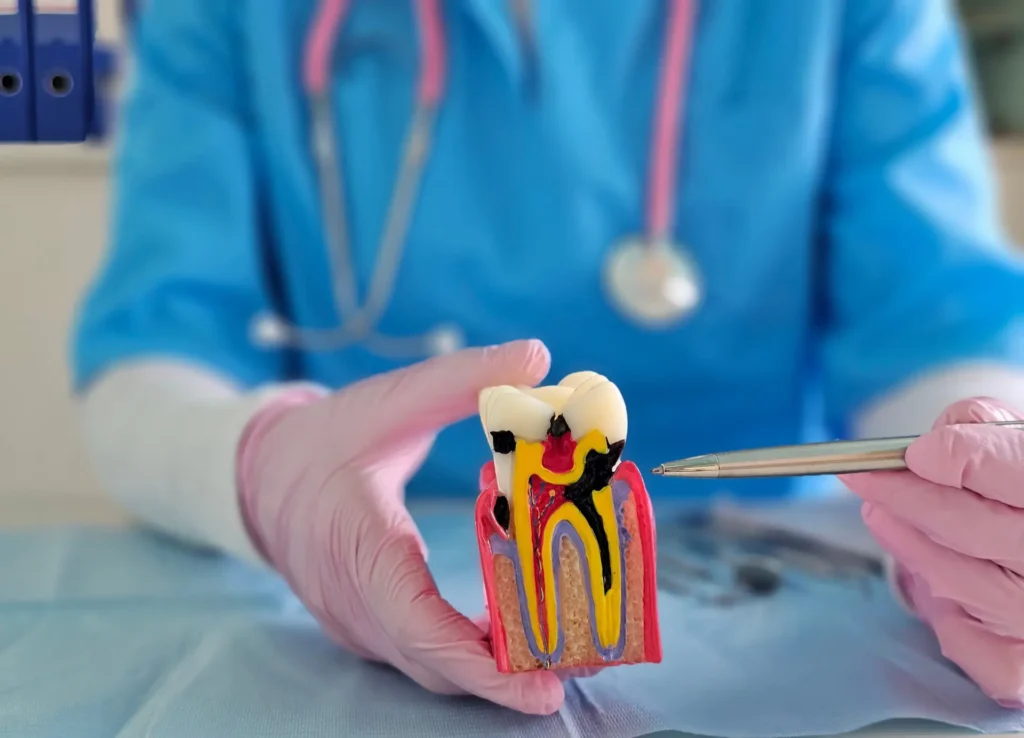
When the pulp in the center of a tooth is inflamed or infected, it tends to announce itself:
An exam and an X-ray are the only way to know for sure. Hurting right now? Our page on what to do about a toothache can tide you over until your visit.
• A throb that keeps returning or never quite goes away
• A hot or cold twinge that hangs on for 30 seconds or more
• Pain when you bite down on that tooth
• A small pimple or swelling on the gum nearby
• One tooth turning gray or darker than the rest
Is it as bad as people say?
No, and it’s the reason a lot of people put off calling. The infection is what hurts; treatment is what stops it. We get the tooth fully numb before starting, and patients regularly tell us it felt about like a filling.
You came in hurting. The goal is for you to leave feeling better.
A day or two of mild tenderness afterward is common, and most people are surprised by how quickly it fades.
How the procedure works
Root canal therapy is part of our restorative care: we use it to rescue a tooth that’s infected or badly damaged instead of extracting it.
Numb: the tooth and gum are thoroughly anesthetized.
Open and remove: we reach the pulp chamber and take out the infected tissue.
Clean: the canals are disinfected and shaped.
Seal and protect: the canals are filled and sealed, and most teeth then get a dental crown for strength.
One or two appointments is typical, depending on the tooth and the extent of infection.
What if I just leave it?
Tooth infections don’t clear up on their own. Over time they can push out past the root tip and form an abscess, which is harder to treat and more painful.
Eventually, an infected tooth that’s never treated usually has to come out, and then you’re looking at ways to replace the tooth so your bite stays stable. Acting while the tooth is still saveable is almost always the simpler path.
Save it or pull it?
For an infected tooth, these are usually the two choices.
Either can be reasonable. We’ll show you which applies to your tooth before you decide.
• Your tooth stays
• Your tooth is removed
Cost & insurance
The tooth sets the price. Front teeth have one canal and cost less; molars have three or four and take longer. The crown that usually follows is billed separately.
PPO plans typically pay part of root canal treatment. We check your benefits and give you a written cost up front, so the price doesn’t change midway. For bigger cases, see our insurance and financing options.
In active pain? Urgent infected teeth can often be seen the same day, Monday through Thursday, so you aren’t stuck waiting it out over a long weekend.
How much is a root canal?
The fee depends on the tooth, since back teeth have more canals to treat. It covers the root canal itself; most back teeth also need a crown afterward. Below are our 2026 self-pay prices. Insurance usually lowers your share, and you’ll get a written estimate after we check your benefits.
2026 self-pay prices
- Front tooth $1,000
- Premolar $1,200
- Molar $1,500
- Core buildup (if needed) $350
- Crown (if needed) Priced after your exam
Book a visit
No rush. No judgment. No surprises.
Root canal FAQs
Does it hurt?
What’s the cost without insurance?
How long does it take?
Will I need a crown afterward?
What if I put it off?
Should I just have it pulled?
Book a visit
No rush. No judgment. No surprises.